Kent
Of Human BondageKent is presented as a landscape of seasonal work and communal custom, but also as a place of return for Philip Carey. At Ferne, the hop fields make rural life tangible through family labor, shared meals, and familiar scenery; walking among the hops, Philip feels at home and recognizes the beauty of England.
Setting and Seasonal Custom
Ferne is a village in Kent and the native home of Mrs. Athelny. Each year, she returns with her husband and children to pick hops, a seasonal outing that combines paid work with the pleasures of a family holiday. For many local families, the annual journey is anticipated for months: the work is done together in the open air, children experience it as a picnic, and young people meet and court in the evenings. The season commonly ends in weddings.
The custom also has its own temporary geography. Families travel with bedding, cooking pots, pans, chairs, and tables, leaving Ferne largely deserted while the picking continues. Where workers once slept in barns, a row of huts beside a meadow had been built about ten years before the events described. The Athelnys occupy the same hut each year, making their seasonal return a settled family routine rather than a one-time excursion.
Work and Local Boundaries
The hop-pickers are organized into companies of ten adults, with children not counted in the total. Each group works around a large sack mounted on a wooden frame, about seven feet high, into which the picked hops are gathered. Athelny boasts that, once his children are old enough, he will form a company consisting entirely of his own family. He hopes to become a bin-man, responsible for supplying the strings of hops to the bins, although for now he is more inclined to encourage others than to exert himself at the work.
The annual labor does not promise the same financial reward it once did. The evidence describes picking as offering little beyond a free holiday, and the story of Mrs. Hill’s piano—supposedly bought from her earnings—circulates with local skepticism about whether she had also drawn on her savings. The hoppers from London are treated as outsiders: local people call them foreigners, keep their distance, and regard them with a mixture of contempt and fear. The shared work therefore sits alongside a clear boundary between established country families and arriving workers.
Philip’s Return to the Landscape
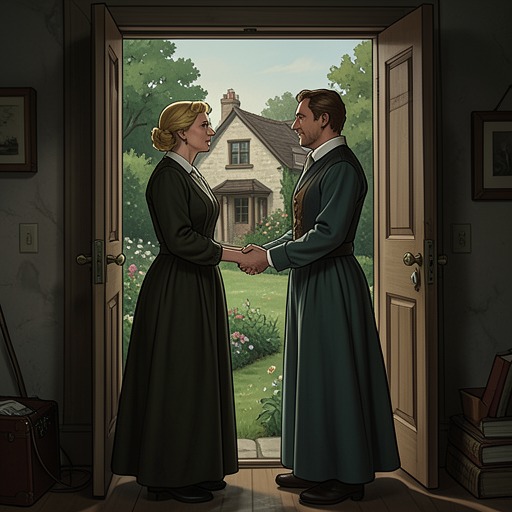
Philip arrives at Ferne in the evening. Athelny meets him at the station with a borrowed cart and has arranged a room for him at a public house about a quarter of a mile from the hop field. They leave Philip’s bag there and walk to the meadow huts, where families gather around stick fires while supper is being cooked. The children have already been browned by sun and sea air; Mrs. Athelny, busy frying bacon and watching the younger children, welcomes Philip warmly. In her sun-bonnet, she seems entirely at home in the country, as though her years in the city had not displaced her rural identity.
The next morning, Philip follows Sally through the hop rows. The scene feels familiar rather than strange: hop gardens and oast-houses belong to his memories of boyhood and to his idea of a Kentish landscape. Under the bright September sun, he takes in the green leaves and the ripening hops, and the experience overwhelms him with the richness of the countryside. His response is not simply to the fields as scenery; it is a recognition that he can still feel the loveliness of England.
Family Life and Cultural Imagination
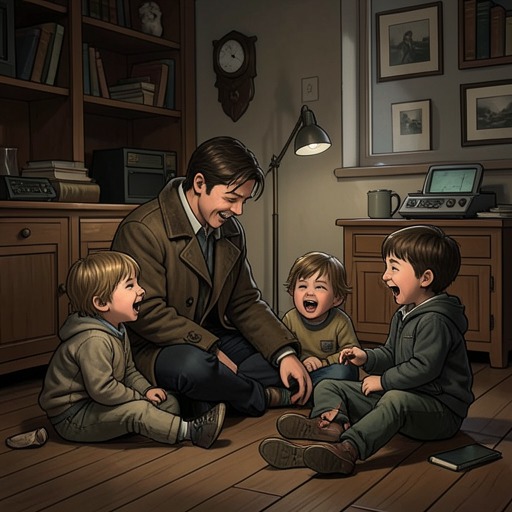
The hop field becomes a setting for both work and storytelling. As the family picks, Athelny tells his children the story of Aphrodite’s trials for Psyche and the love of the unseen bridegroom. Listening, Philip feels that the classical tale belongs naturally to the scene. The vivid green rows and the children among the pickers seem to him as fully expressive of the Greek spirit as books or museums. Rural Kent does not appear as a lesser substitute for cultivated culture; in this moment, it offers its own vivid form of beauty.
Philip’s attention widens from the hop rows to the country around them: white roads, hedgerows, meadows, elm trees, hills, copses, marshes, and the North Sea. The landscape matters because it gives him a recovered sense of attachment, grounded in direct experience rather than abstraction. At Ferne, seasonal custom brings him into the Athelnys’ family world, while the familiar fields let him recognize a beauty he is grateful still to perceive.